


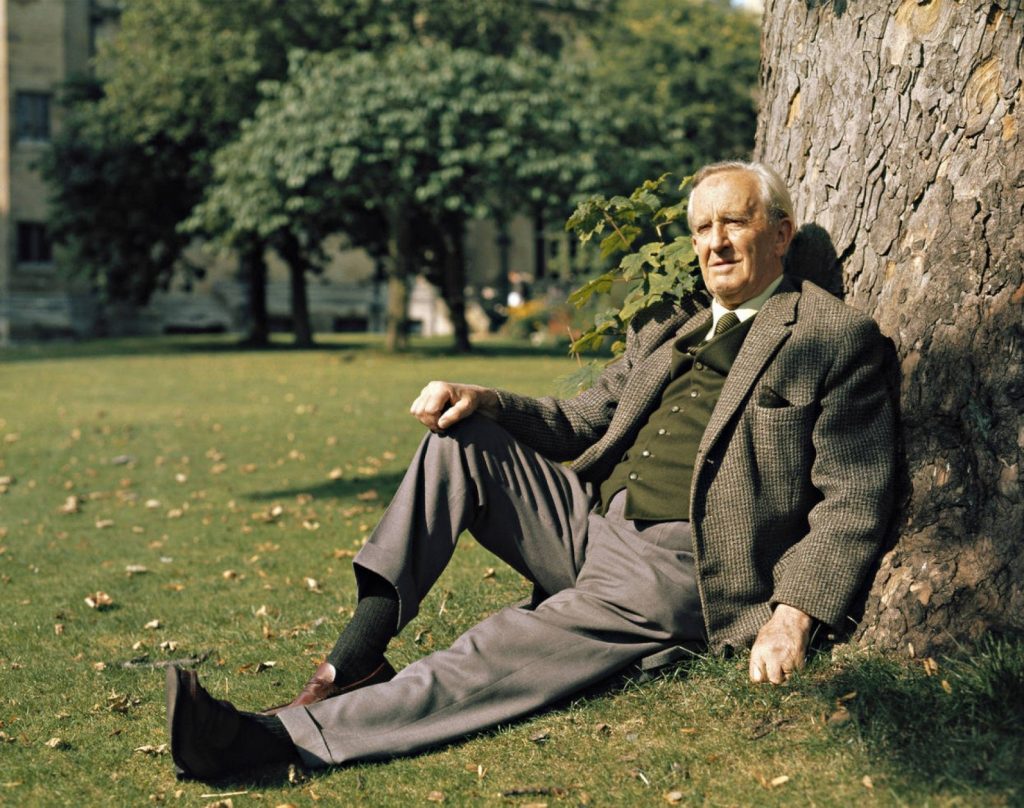
“Middle Earth” is a world to itself, a magical mythical place like no other. It is one of the most famous places in century fiction, and the wonderful fruit of a brilliant imagination. The Lord of the Rings, the trilogy set in this mysterious world, has become one of the great classics of twentieth century literature. It has been translated into dozens of languages and imitated by dozens of writers, storytellers and film makers; yet no-one has surpassed the genius of the original. J.R.R. Tolkien, the author of Lord of the Rings, was the improbable creator of this great work of .
It was while he was marking exams in the early ‘s that J.R.R. Tolkien, Professor of Mediaeval English Literature at Oxford University, wrote down a strange sentence that started: “In a hole in the ground, there lived a hobbit…”
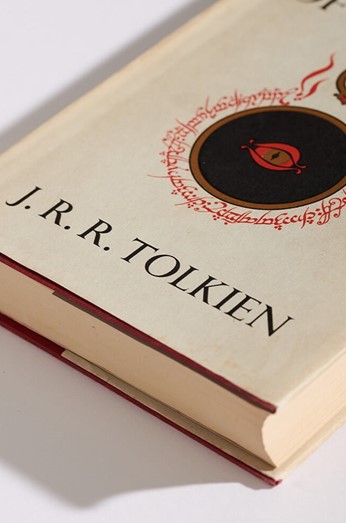 Obviously, creative writing was more interesting than marking papers, as Tolkien went on to transform his sentence into a full novel, called “The “, published in .
Quite unlike any other book in contempo- rary English literature, the Hobbit was an extended fairy tale, an allegory set in a mythical world peopled with strange creatures and animals. It was not the sort of book that ought to have become a best seller in the late 1930’s, but it did – so much so that the publisher requested a sequel. Delayed by the horror of , the first volume of Lord of the Rings eventually reached the bookshops in 1954.
Since then, Tolkien has come to be seen as one of the most important figures in English literature of his century, an original who created his own style of liter- ature and his own universe. So, who was this unusual figure, born in the late nine- teenth century in rural South Africa?
John Ronald Reuel Tolkien first came to England at the age of , when his mother determined that it would be better for him to be brought up in a climate. His father, a banker, should have followed his family back to England, but shortly after their departure Arthur Tolkien caught rheumatic fever and died; Ronald and his brother were thus brought up by their mother from age four onwards.
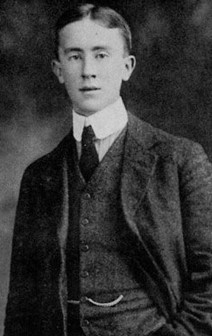 Tragedy was to mark Ronald’s childhood again; when he was 10, his mother died of , leaving him and his brother to be brought up in the care of a family friend, Father Francis Morgan, a Catholic priest.
With no parents, and no family except his , Ronald was left much to himself; a dreamer, he loved reading and could happily lose himself in the imaginary worlds he passed through in the pages of novels. Yet as a pupil at King Edward’s School in Birmingham, he proved to be a brilliant linguist, and soon mastered and German, Latin and Greek, plus Anglo Saxon, Old Norse, Icelandic and Finnish. His interest in Scandinavian languages also led him into a world of sagas and mythology.
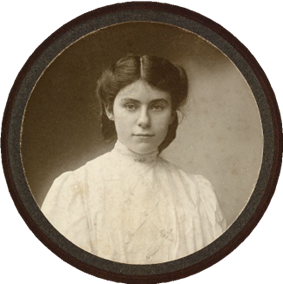 At the age of , Ronald fell in love with a pretty girl, three years his senior, who was another orphan living in the same lodging house in Birmingham. In the strict climate of Edwardian Britain, teenage romances were frowned on, and although Ronald and Edith did their best to keep things a secret, it was not very long before someone spilled the beans. Furious, Father Fran- cis removed Ronald to new lodgings, while Edith’s guardians sent her to live with relatives in the genteel town of Cheltenham.
Heartbroken, Ronald swore eternal love to Edith, even though he could not see her again; and with no other girls to worry about, he escaped from his sadness into hard work at school, even- tually winning a scholarship to Oxford to study .
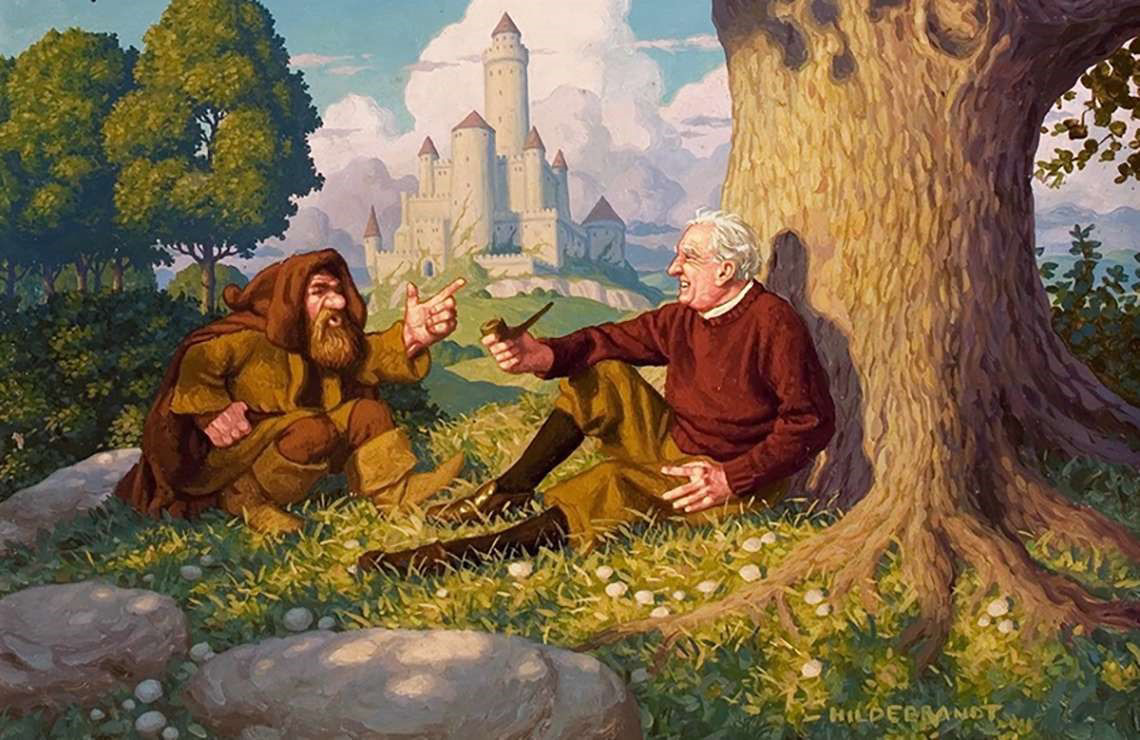
The question of whether art imitates reality, or vice versa, is one which is often discussed; but in Tolkien’s case, the answer seems to be ! Raised on a diet of novels, sagas and imaginary fiction, Ronald Tolkien did the kind of thing “that only happens in books”; when struck on the day of his 21st birthday, he wrote to Edith announcing his inten- tion of marrying her at once!
Edith, however, had in the mean time got engaged to a young man in Cheltenham, and wrote back to Ronald with this unexpected news! On receipt of her letter, Ronald hurried down to Chel- tenham and began courting Edith again; the other young man was soon !
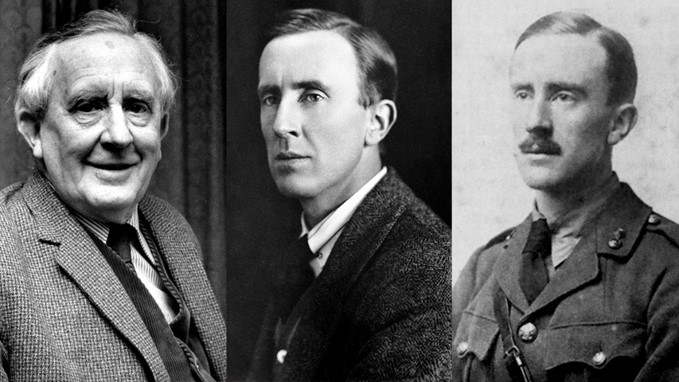
Then the war began. During the next year and a half, Ronald completed his degree in English (having changed courses), getting married to Edith before being sent off to fight in the trench- es. Two months later, he was on the Somme, where he saw many of his great friends killed.
By good , Ronald came out of the war physically unscathed; but psychologically, he had been through a deeply marking experience. The war had his love of the calm of the countryside, and hatred of industry and the evil of inhumanity and war. These themes were to come up repeatedly through the idealism expressed in his fiction, from the Hobbit to the Lord of the Rings and beyond. Tolkien died in .
WORDS:
– trilogy – set of three books – allegory: a story that uses symbols to express a deeper truth about life – in the care of: by – his senior: older than him – frowned on: disapproved of – swore: promised – scholarship: financial help, bursary – diet: menu – degree: university diploma – unscathed: undamaged.